Mastering Tree Protection Zones: A Practical Guide to Tree Longevity After Construction
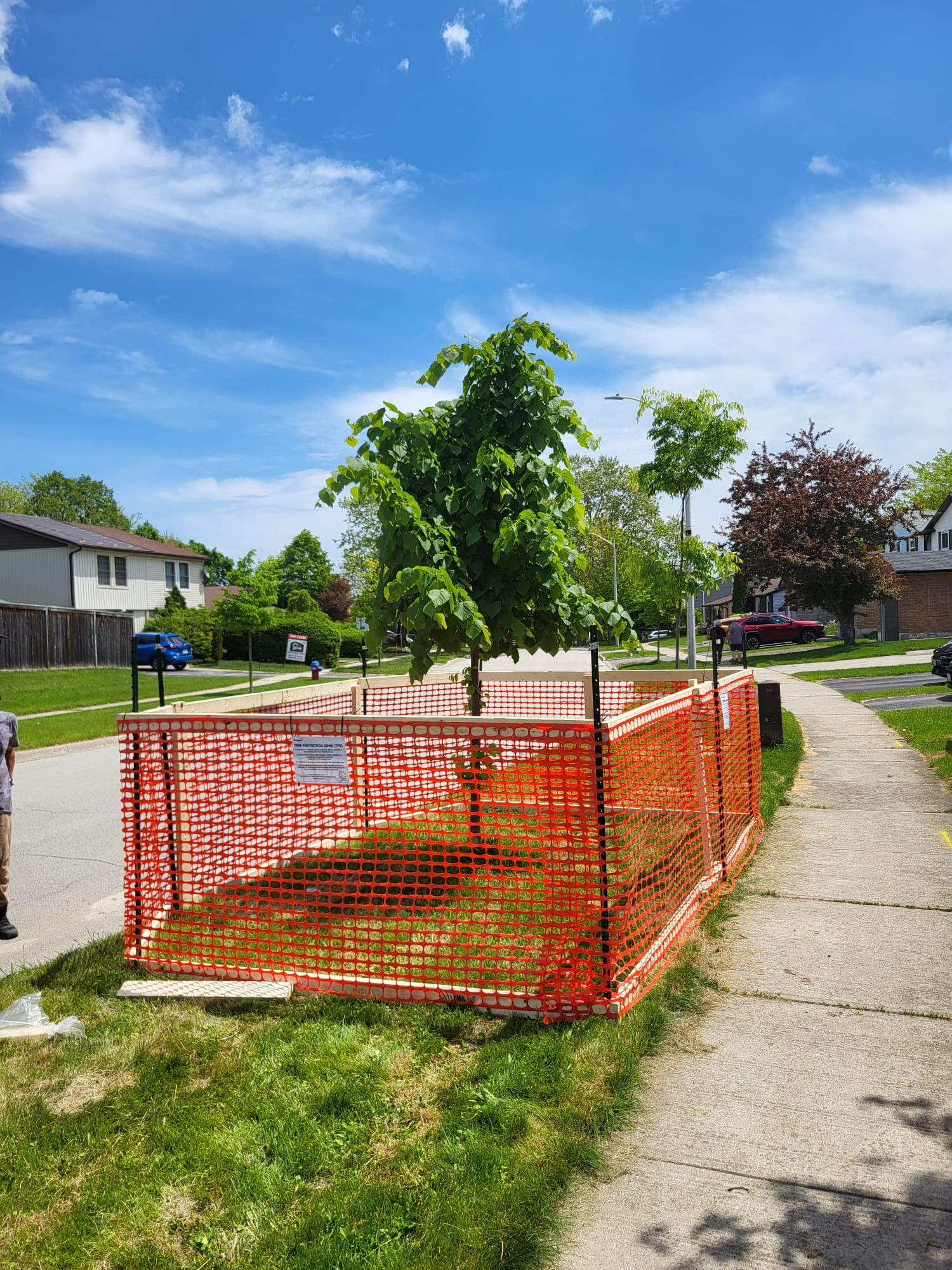
About roots and soil health
When tree protection fails
You may have seen this happen: A construction project wraps up, the tree protection zones (TPZs) are dismantled, and everything looks great. The protected trees appear healthy, but a few years later, property owners notice signs of stress or decline. What went wrong?
The sad truth is that many street trees only live about 20 years. That’s a short life, considering many tree species can live decades or centuries in the natural environment. A 2019 Boston University study confirmed that “urban trees live fast and die young” compared to those in rural forests.
A major culprit in urban tree mortality is often traced to unseen construction damage, particularly to the root zone. While the TPZs may have been properly marked on paper, as with all the best-laid plans, success or failure is determined by execution. Soil compaction, root disturbance, and trunk damage may go unnoticed at first, but they can lead to long-term decline. If TPZs are not properly enforced, the entire investment in tree preservation is wasted.
Getting it right
Construction and trees don’t have to be at odds, though. Tree protection zones (TPZs) are the front-line defence against construction-related soil damage.
Done right, TPZs can be seamlessly integrated into your project to protect the trees—without sacrificing operational efficiency or design flexibility.
This guide dives into the science behind tree protection zones. Later in the article, we’ll highlight best practices for TPZ design and implementation and practical tips to help integrate tree preservation into the development process.
Soil and roots: the living foundation for a tree
Preserving healthy soil structure is a primary concern within the TPZ and one that is often misunderstood.
Soil is not just dirt—a medium that holds trees up. Soil is a complex ecosystem composed of minerals, organic matter, water, air, and a diverse community of microorganisms, fungi, and invertebrates that work together to support healthy plant growth.
Tree root systems serve as supply lines for water and minerals, carbohydrate storage, and hormonal signalling systems while physically anchoring trees in the ground. These roots range in size from large anchor roots to tiny, almost microscopic root hairs. Disturbances to this system can lead to physiological stress, reduced growth, and increased susceptibility to disease.
Compromising the root zone sets off a chain reaction of decline that may take years to become evident but is ultimately irreversible.
Construction activities can disrupt this underground ecosystem in several ways:
- Soil compaction is the hidden but dominant factor in construction-related tree failures. Compaction limits root function and predisposes trees to secondary problems like pests and diseases. It reduces soil pore space and makes the soil denser. Pore space normally accounts for about 50% of the healthy soil volume. When these pores are compressed, roots can’t access the oxygen they need for respiration and growth. In short, the trees suffocate.
- Changes in soil chemistry from construction materials can alter pH levels and undermine nutrient availability and microbial life.
- Removing the topsoil or mixing layers destroys fungal networks that trees depend on for nutrient exchange and communication.
Understanding these biological relationships explains why construction-phase soil management is so important for long-term tree preservation.
Preventing compaction through proper site management during construction helps support the health and stability of the protected trees over time.
The first step is to show the area that needs to be protected by the TPZ. This is often bigger than one might expect. That’s because most tree species produce horizontally spreading roots(see image below left) rather than vertically to penetrate deeply into the earth (below right).
Illustration 1: Roots Grow like Plates, not Mirrors
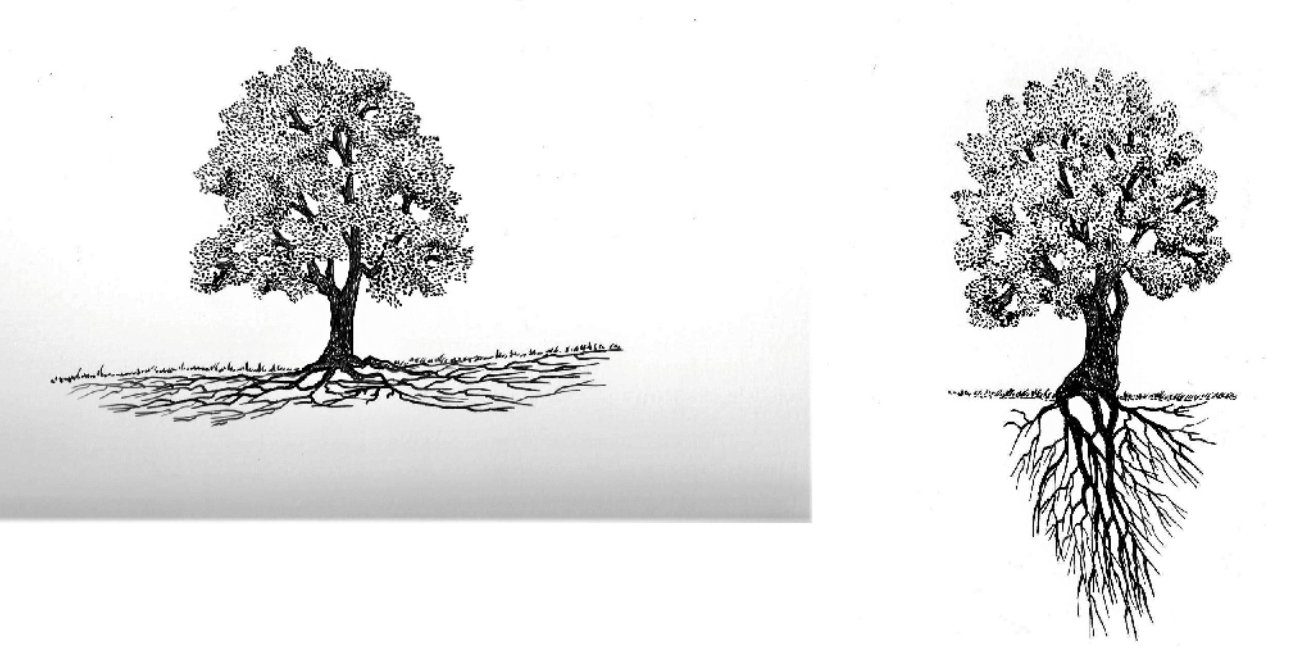
Image source: New York State Urban Forestry Council
Understanding Tree Protection Zones (TPZs)
A TPZ is a designated area surrounding a tree that must remain undisturbed during construction activities. The main purpose of the TPZ is to ensure the structural integrity and long-term health of trees by protecting the soil, roots, trunk, and canopy from construction-related damage.
In many cities, TPZs are mandated by law and are part of the construction permit application for projects where trees are present. For example, the City of Toronto’s TPZ regulations are set out in three main documents:
- Toronto’s Private Tree Bylaw
- Ravine and Natural Feature Protection Bylaw
- Tree Protection Policy and Specifications for Construction Near Trees
The TPZ provides a physical boundary that protects the essential anchor and feeder roots and shields the trunk and branches from physical impacts caused by machinery or construction materials.
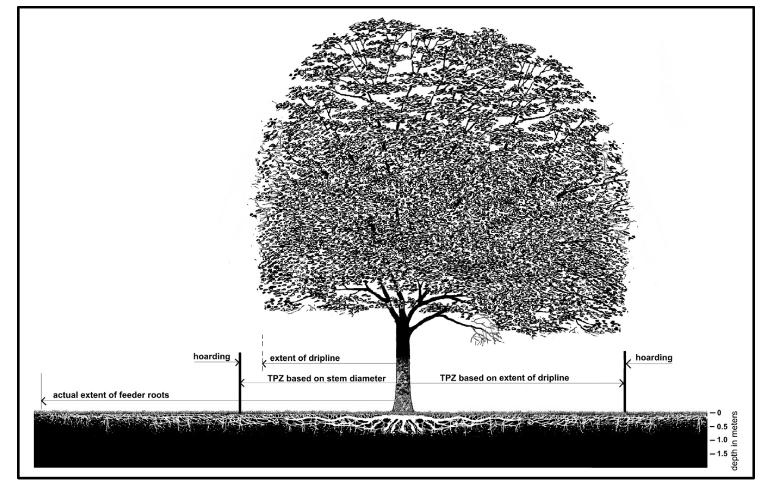
Most TPZ requirements are based on a multiple of the trunk diameter at breast height (dbh). The dbh measurement is a common industry method for estimating root spread to ensure adequate protection of the critical root zone (CRZ) for water, nutrient uptake, and structural stability. The dbh multiple may be adjusted to account for the species, age, and site conditions.
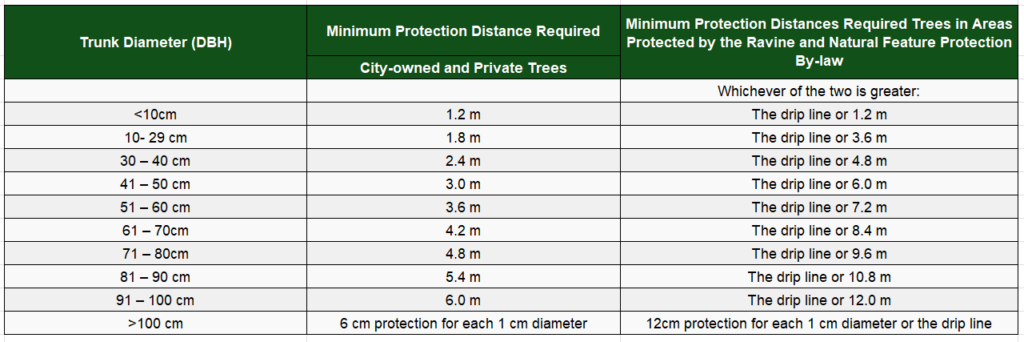
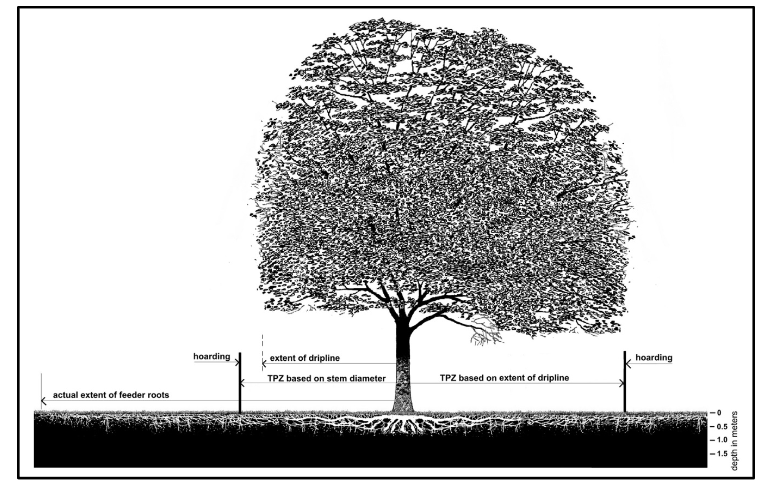
Minimum protection distances are measured from the outside edge of the tree base. The distance will be either the tree’s drip line, or the specified distance based on trunk diameter, depending on municipal requirements. For instance, a tree on city or private property with a DBH of 40 cm requires a minimum protection distance of 2.4 meters from its base. That distance increases to 4.8 meters for trees protected by Toronto’s Ravine and Natural Feature Protection By-law. (See page 6 of the Toronto Tree Protection Policy and Specifications document.)
Illustration 2: Minimum tree protection zone determination method used by the City of Toronto
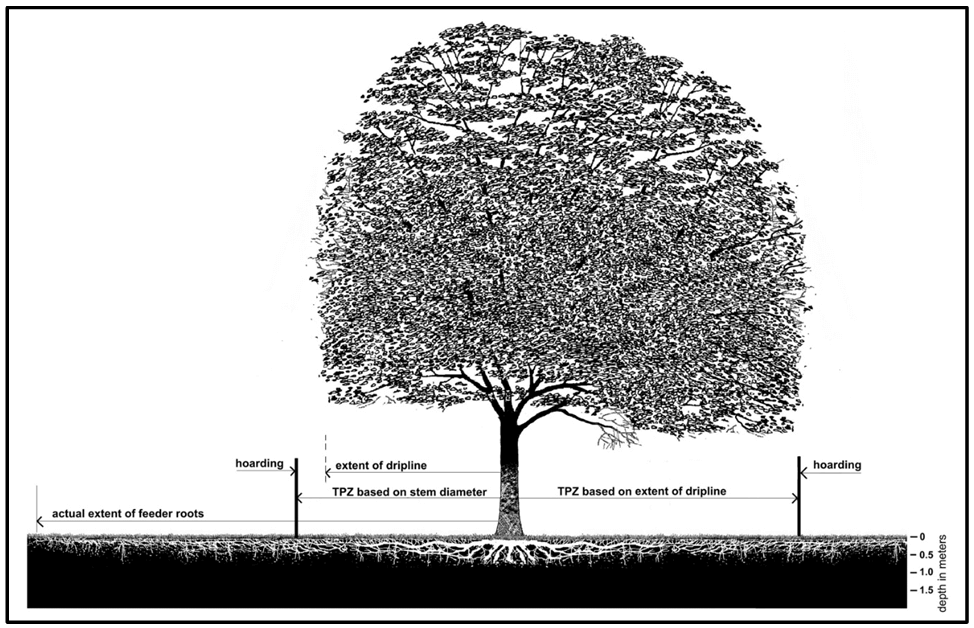
Image source: City of Toronto
Other cities and municipalities within the Greater Toronto Area (GTA) have similar regulations, and it is important to consult the local rules governing your project site.
Best Practices to Design and Implement TPZs
The rest of this article delves into the best practices in tree protection as described in the ISA-BMP Managing Trees During Site Development and Construction. Best Management Practices: 3rd Edition.
Note: A summary of these TPZ best practices for the 6 phases of a construction project is provided at the end of this article.
Pre-Construction Planning
Establishing TPZ requirements for your construction permit application
If you work in an area with tree protection regulations—which includes almost everywhere in the GTA and several other cities across the country—you will need an Arborist Report as part of the construction permit application. That report includes a tree inventory and tree protection plan (TPP).
The TPP can have a significant impact on the total project design, including the placement of structures, access points, and driveway and parking lot locations. It details the location of each tree, its TPZ boundaries and specific protection measures such as fencing and barriers, and adjustments to access points or infrastructure needed to avoid root zone conflicts.
The TPP must also account for soil preservation strategies, which are often overlooked yet necessary for maintaining tree health. Soil aeration, organic amendments, and avoiding material storage within the TPZ are considerations in the planning phase.
That’s why it’s so important to engage the arborist and integrate the TPP into the overall site plan from the very beginning of the project, long before any construction work begins.
The arborist first inventories the trees within and next to the construction zone, compiles species, size, and condition data, and plots the tree location and TPZ requirements on the construction site plan. The inventory also includes trees on neighbouring properties within a boundary zone.
The arborist will quickly find conflicts between the initial plan and the tree protection requirements and offer remedies to address issues that may cause a permit application to be delayed or denied.
**Best practice: Bring the ISA Certified Arborist into the project during the early planning phase—well before any site work begins. Their guidance will speed up the permitting process and ensure the tree protection requirements are met with the least disruption to the project plan.
Establishing Physical Barriers
Once the permit is approved, it’s time to install the protective fencing around the TPZs. The City of Toronto mandates specific fencing requirements, including a minimum fence height of 2.4m (8ft) plywood hoarding or equivalent, or 1.2 meters (4 ft) orange plastic web snow fencing along roadsides where visibility is a concern. These fences must be placed before any site work begins and remain intact throughout the project to ensure compliance.
Clear signage is usually required on all sides of the barrier, showing the presence of a TPZ and outlining prohibited activities within this zone.
Prohibited Activities Within TPZs:
- Vehicles, heavy machinery, or foot traffic are prohibited within the TPZ, as these cause physical damage above and below ground.
Where space limitations prevent full TPZ barriers, horizontal hoarding may be used. Horizontal hoarding consists of protective ground coverings of thick mulch layers under three cross-laminated plywood sheets to be installed where access requirements encroach on a TPZ. These methods help distribute weight and minimize pressure on the root system.
- Refrain from any excavation, trenching, or grade changes within the TPZ.
If excavation is unavoidable, lower impact no-dig techniques such as air-spade, hydro vac, or hand digging can minimize the damage. These methods allow for carefully showing and protecting major root structures, reducing the impact on the tree’s stability and nutrient uptake.
If root pruning is unavoidable, it must be performed by a qualified arborist following proper procedures.
- Do not dispose of liquids or harmful substances in these areas.
- Do not store materials, debris, or equipment within the TPZ.
Monitoring During Construction
Well-planned protection measures can be undermined if site personnel do not adhere to restrictions, so ongoing monitoring and education are needed throughout the project.
Any breaches of the TPZ should be documented and addressed at once, ensuring accountability among all stakeholders.
You should also expect periodic inspections by a city arborist to ensure that TPZ barriers are still intact and that soil conditions are not compromised.
Post-Construction Recovery & Long-Term Monitoring
Even with the best precautions, construction activity places stress on trees. Once the project concludes, additional remediation steps are often recommended to ensure tree health. These may include:
- Soil aeration to restore proper air and water exchange.
- Eliminating turfgrass and applying a 2 to 4 in (5 to 10 cm) layer of organic mulch will help to reduce competition for soil moisture, build soil texture, and minimize evaporative water loss.
- Watering schedules:
- should be adjusted based on post-construction conditions, seasonal needs, and soil conditions
- supplemental irrigation may be needed, especially if grading changes have altered site drainage
- Over-irrigation must be avoided, as prolonged saturation can encourage root rot and fungal infections
Many post-construction failures occur due to unaddressed root damage that manifests over time. It’s important to monitor tree health for an extended time to detect the symptoms and address them promptly. For this reason, annual arborist inspections are recommended for at least three growing seasons post-construction to ensure long-term tree health. These assessments offer an opportunity to detect delayed stress responses and apply remedial treatments such as targeted pruning, fertilization, and pest management.
Why TPZ Compliance Matters
Not adhering to TPZ regulations carries significant financial and legal consequences.
In Toronto, unauthorized damage to protected trees can result in fines exceeding $100,000 per tree, with added penalties for not implementing remediation measures. Beyond regulatory repercussions, trees that suffer root damage become structurally unstable, posing hazards to people and property. Developers may also have to fund expensive tree replacement work, significantly affecting project budgets.
From an environmental perspective, every mature tree lost to poor construction planning is a significant setback to urban canopy goals. Trees provide important ecosystem services, including carbon sequestration, stormwater management, and temperature regulation. Preserving these assets through proper TPZ enforcement helps urban environments stay resilient and ecologically sustainable.
Tree loss can also reduce property values as trees are known to make property more attractive to potential buyers and tenants.
TPZ Best Practices by Construction Phase
Tree Protection Zones (TPZs) offer a straightforward method for safeguarding trees against soil damage during construction, making it easier to plan and execute projects effectively.
This guide highlights the ISA-recommended best practices for TPZ management across the six construction phases, detailing the responsibilities of arborists, landscape architects, and construction managers.
This list is drawn from the official ISA document titled Managing Trees During Site Development and Construction. Best Management Practices: 3rd Edition.
Phase 1: Planning – Establishing TPZ Requirements
Goal: Identify and define TPZs early to integrate them into the project scope.
- Arborist Responsibilities:
- Conduct tree inventory and identify trees for preservation.
- Define TPZ boundaries based on tree species, age, health, and local regulations.
- Submit recommendations in the Tree Protection Plan.
- Outline permitting requirements for TPZs.
- Landscape Architect Responsibilities:
- Integrate TPZ boundaries into preliminary site layouts.
- Ensure grading and drainage plans do not interfere with root zones.
- Adjust building placement where possible to maximize TPZ retention.
- Construction Manager Responsibilities:
- Ensure TPZ requirements are included in project timelines and budgets.
- Plan construction access routes that avoid TPZs.
- Establish communication with the arborist to ensure compliance.
Phase 2: Design – Finalizing TPZ Implementation
Goal: Ensure TPZs are incorporated into final construction and landscaping plans.
- Arborist Responsibilities:
- Calculate TPZ distances based on municipal guidelines.
- Find potential conflicts between utilities, grading, and excavation plans with TPZs.
- Suggest alternative construction techniques to address root zone conflicts (e.g., tunnelling under roots, bridging over root zones).
- Submit TPZ specifications in the Tree Protection Plan (TPP) for permit approval.
- Landscape Architect Responsibilities:
- Modify designs to preserve tree clusters rather than isolate single trees.
- Ensure stormwater management plans do not affect TPZ moisture levels.
- Select permeable paving materials and tree-friendly construction methods near TPZs.
- Construction Manager Responsibilities:
- Review TPZ boundaries on final construction drawings.
- Develop contractor training plans to enforce TPZ restrictions.
- Allocate space for equipment and material storage away from TPZs.
Phase 3: Preconstruction – Implementing TPZ Barriers
Goal: Install and enforce physical TPZ protections before construction begins.
- Arborist Responsibilities:
- Oversee the installation of TPZ fencing before site work starts.
- Ensure fencing meets local standards.
- Conduct pre-construction pruning for clearance where necessary.
- Install mulch or temporary irrigation within the TPZ.
- Ensure proper signage and documentation to inform construction crews about TPZ restrictions.
- Landscape Architect Responsibilities:
- Verify that TPZ barriers are correctly placed and documented in site logistics.
- Ensure that landscaping elements (e.g., irrigation lines and lighting) do not interfere with TPZs.
- Construction Manager Responsibilities:
- Ensure TPZ signage is installed to prevent unauthorized access.
- Restrict equipment movement and material storage in TPZ areas.
- Schedule a final arborist review before major site work begins.
Phase 4: Construction – Protecting Trees During Work
Goal: Enforce TPZ protections to prevent root damage, compaction, or soil contamination.
- Arborist Responsibilities:
- Supervise root pruning and soil aeration if excavation is necessary within a TPZ.
- Provide emergency interventions for TPZ violations.
- Adjust irrigation and mulching strategies to maintain healthy soil conditions.
- Construction Manager Responsibilities:
- Monitor grading and excavation to ensure they do not extend into TPZ areas.
- Ensure tree protection barriers stay intact throughout the construction phase.
- Prohibit storage of materials, vehicle movement, and excavation within TPZs.
- Require contractors to follow alternative construction techniques when necessary.
- Report any tree damage incidents to the arborist at once.
Phase 5: Landscaping – Ensuring TPZ Stability
Goal: Prevent tree damage from final grading, irrigation, and plant installations.
- Arborist Responsibilities:
- Monitor soil compaction and moisture levels within TPZs.
- Supervise the installation of compatible plants near preserved trees.
- Recommend final TPZ adjustments before barrier removal.
- Landscape Architect Responsibilities:
- Ensure landscaping elements complement TPZ areas, avoiding excessive soil disturbance.
- Select root-compatible plants and prevent over-irrigation within TPZs.
- Construction Manager Responsibilities:
- Prevent landscaping equipment from compacting soil within TPZs.
- Coordinate with arborists to remove TPZ barriers only after approval.
Phase 6: Postconstruction – Long-Term TPZ Management
Goal: Ensure long-term tree health after construction is completed.
- Arborist Responsibilities:
- Conduct a final tree health assessment to identify post-construction stress.
- Implement remedial treatments (e.g., pruning, soil aeration) if necessary.
- Develop a long-term tree maintenance plan for property managers.
- Landscape Architect Responsibilities:
- Ensure post-construction landscape installation and maintenance aligns with tree needs.
- Educate property owners on ongoing TPZ maintenance.
- Construction Manager Responsibilities:
- Complete final site cleanup without affecting TPZs.
- Confirm compliance with all tree protection conditions before closing the project.
TPZ Best Practices Checklist
- Ensure TPZ boundaries are clearly defined and marked on all plans.
- Install physical TPZ barriers before any site work begins.
- Restrict grading, excavation, and material storage in TPZs.
- Maintain TPZ fencing and signage throughout construction.
- Conduct regular arborist inspections to ensure compliance.
- Implement alternative construction techniques where TPZ encroachment is unavoidable.
- Preserve soil health by preventing compaction and maintaining moisture levels.
- Develop a long-term maintenance plan for post-construction tree health.
Final Thoughts
As we’ve explored, TPZs are powerful tools that allow designers and builders to weave the natural beauty and benefits of trees into our cities without compromising the financial and functional priorities of the project.
The science we’ve discussed highlights the importance of careful planning, enforcement, and monitoring at every step of the construction journey.
When we prioritize tree protection, we’re not just ticking boxes–we’re creating projects where infrastructure and nature dance in harmony. The result is developments that look fantastic, boost property values, and contribute to a more sustainable urban environment.
At Gray Matter Forestry Consulting, we’re all about helping you achieve this balance. By bringing us on board early in your planning process, you’re ensuring that your Tree Protection Zones are designed and implemented with expertise and care. Together, we can craft projects that meet today’s needs and nurture Toronto’s urban forest for generations to come. Let’s build a greener, more vibrant city–one protected tree at a time.
Tree Protection Guide for Toronto Construction Projects, 2025
Expert Guide to Protecting the GTA’s Urban Forest During Construction
“The future of sustainable and inclusive cities will surely depend
on how we tend to and protect our urban trees.”
World Economic Forum , 2022
What you’ll learn about tree Protection and construction in the Greater Toronto area
If you’re planning a construction or renovation project in Toronto and the Greater Toronto Area (GTA), consider the tree protection laws from the outset. It could save you hours of frustration and thousands of dollars in penalties and rework fees.
Protecting trees isn’t just about meeting regulations—it’s about avoiding costly delays, enhancing property value, and creating sustainable, attractive spaces. Shade, reduced energy costs, and improved curb appeal are just a few of the many ways that trees increase property values and quality of life in cities. However, without proper planning, construction can cause irreversible damage to these valuable assets.
This guide is for designers incorporating trees into a site plan, contractors managing construction logistics, and property owners balancing development with greenery. It offers practical and proven strategies to integrate tree preservation into your project from start to finish.
Specifically, you’ll learn how to:
- navigate Toronto’s tree protection bylaws and regulations
- implement a Tree Protection Plan (TPP)
- avoid common mistakes that lead to unexpected fines or tree loss.
- enhance property value through strategic tree preservation
- create sustainable, attractive spaces that benefit from a mature tree canopy
The goal is to help you protect trees while keeping your project on track and compliant.
Toronto’s Tree Protection Framework
Tree preservation is a cornerstone of Toronto’s urban development policy. The City of Toronto has set a target of 40% canopy cover to maintain high livability standards. This amount of cover is believed to produce the full range of environmental, economic and community services that trees can provide.
To achieve its lofty goal, the city has created strict protections for trees on public and private land to maintain the urban forest while supporting responsible development.
These regulations are set out in two key documents:
Other municipal and urban governments within the GTA have implemented their own tree preservation bylaws and regulations, so project designers and property developers need to become familiar with their local requirements.
The Business Case for Tree Protection
Trees are valuable assets that contribute significantly to property worth and urban quality of life. Research shows that trees can lead to higher sale and rental prices. One study found that even a 1% increase in tree cover can boost property values by a corresponding 1%.
Here are a few of the proven benefits that trees provide in urban communities:
- Improved air quality: Trees remove air pollutants, reducing the risk of respiratory problems and asthma
- Enhanced mental health: Exposure to trees decreases anxiety, depression, and stress levels
- Increased physical activity: Urban trees are linked to higher physical activity levels, leading to decreased obesity and improved cardiovascular health
- Temperature regulation: Trees reduce summer air temperatures by 2-4° Fahrenheit on average, mitigating heat-related health risks
- Energy conservation: Trees provide shade and reduce energy usage for cooling in buildings
- Stormwater management: Urban forests promote beneficial water quality and reduce stormwater management costs
- Carbon sequestration: Trees absorb and store carbon dioxide, helping to mitigate climate change
- Increased property values: Communities with healthy tree cover attract new residents, industry, and commercial activity.
- Noise reduction: Trees block or absorb noise from the urban environment
Using This Guide
The following sections walk you through the six phases of tree preservation in construction:
Each section provides actionable steps, technical requirements, and professional insights to help you implement effective tree preservation strategies. For specific permit requirements, visit the City of Toronto’s tree permit application portal.
Tree preservation can be achieved without compromising project goals. The following sections will guide you through this integration process, beginning with the planning phase.
Phase 1: Planning for Tree Protection Success
Frequently, the landscape element of a construction project is designed and installed last. Without regulation, tree protection planning is frequently not considered or, at best, gets fitted in “where possible.” The green elements of the plan are easily viewed as expendable.
Tree protection is a mandatory aspect of the construction permitting process in many urban and suburban areas across Canada, including most communities in the Greater Toronto Area (GTA). Property owners and developers who fail to incorporate tree protection plans during a project’s initial phases may pay dearly later.
Construction permit applications that don’t meet the local tree protection standards may be sent back for rework, which can lead to delays and extra costs. Sometimes, the applicant must abandon the project entirely.
Proactive Planning
Proactively incorporating tree preservation during the planning phases of a project can avoid those costly delays. It helps ensure compliance with the tree protection regulations.
Steps in the Planning Phase
1. Tree Resource (Inventory)
A tree inventory is the first step in understanding the site’s natural assets. A detailed inventory provides:
- Tree species, size, health.
- Tree location- Toronto’s regulations require inventories to include all trees within 6 meters of the project boundary to ensure comprehensive planning.
- Identification of trees protected under Toronto bylaws and the Ravine and Natural Features Protection Bylaw within the larger Toronto bylaw.
- Any notes concerning the trees, such as defects, poor form, and existing conflicts with built infrastructure.
2. Preliminary Tree Protection Plan
This step is often skipped with the idea of saving time or money or perhaps as an oversight. This is a mistake because the preliminary plan will find conflicts with the proposed design early on, when they can be easily addressed before formal drawings are created.
For example, soil excavation is one of the most common issues addressed in tree protection plans. Equipment movement causing compaction over tree roots and root damage from digging are primary tree protection concerns. The arborist can advise designers on ways to address these design issues.
3. Construction Permit Application Package
a. Tree Protection Plan (TPP)
The TPP is a formal document required as part of the construction permit application. Tree regulations enforcement staff will review the TPP to ensure proper precautions have been planned and effectively communicated.
TPPs are diagrams that show the existing trees on a property at the time of a permit application. Trees are shown in relation to the planned construction on a site plan.
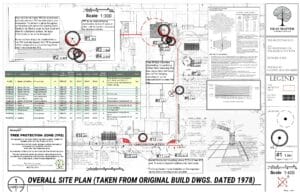
TPPs include:
- Tree Inventories: Detailed assessments of tree species, size, and condition.
- Tree Protection Zones (TPZs): These zones define clear boundaries to shield trees from construction impacts. Toronto mandates specific TPZ distances based on tree diameter to ensure that critical roots and soil remain undisturbed. No construction, grade changes, or material storage are allowed within this critical root area without a permit.
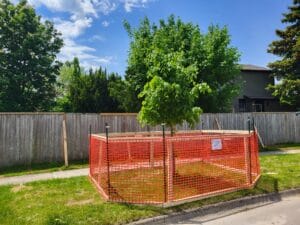
- Any special notes or recommendations the arborist may provide to ensure satisfactory tree protection.
b. Replanting Plan
When required by the city, replacement trees may need to be shown on a separate drawing of the same site plan. Important details include:
- Location, species, and calliper (diameter given by the nursery). Toronto requires replacement trees to be at least 50 mm in caliper for deciduous trees and 1.75 to 2.5 metres in height for coniferous trees.
- The time of replanting (typically the next spring or fall planting season in the year) after construction, whichever is earlier.
c. Arborist Report
The Arborist Report document communicates all the Tree Protection Plan (TPP) details and addresses any concerns or grey areas arising from the design.
4. Evaluating Suitability for Preservation
Not every tree needs to be preserved under the tree bylaws. The following criteria are used to determine which trees must be protected and which trees should be removed.
- Proximity to planned construction: Healthy trees that do not conflict with “as of right” development usually won’t be approved for a removal permit. Plan revisions will be needed if the permit request is rejected.
- The structural stability and health of each tree are considered. Sometimes, a tree is already in decline or showing serious structural instability that would present a safety hazard to construction crews or site end users. Such trees are often better off removed since the liability of keeping them is too great. It should be noted that this is not the usual condition of a tree. Most trees are perfectly sound and just need some special consideration before construction begins.
- Species tolerance to construction stress. Not all trees react the same way to disturbances such as grading, soil compaction, root cutting, and changes in water availability. Some species are highly resilient, while others are extremely sensitive to environmental changes caused by construction activities. Click here (see page 11) for a list of the sensitive species.
- Longevity and ecological value are important criteria that influence whether a tree is worth saving.
The project details may require that a tree be cut down based on these criteria, and the regulators recognize this. Their main goal is to preserve trees that should be preserved and replace those that should be removed. Their goal is not to get in the way of development, although that does happen sometimes.
5. Tree Appraisal and Bonding
The City of Toronto may require financial securities for protected trees. These bonds ensure that funds will be available to replace or remediate damaged trees. The bond amount is based on the appraised value of the protected tree plus the removal and replacement costs. This expense can be thousands or even tens of thousands of dollars for large trees. Incorporating these costs into the project budget during planning avoids an unpleasant surprise later.
6. Designing for Tree Protection
Site layout and utility planning must reflect tree preservation priorities. Here are some ways to ensure this:
- Where possible, place all excavations for buildings, roads, and utilities outside TPZs.
- Implement low-impact (no dig) construction techniques near sensitive trees.
- Collaborate with arborists and engineers to design solutions that minimize root disturbance.
Avoiding Common Pitfalls
Construction-related damage often stems from a lack of communication or awareness about tree biology.
- Not considering tree protection in the ideation phase of the planning process often leads to costly redesign and new drawings. Minor design changes can often address problems early in the planning process. These adjustments can significantly reduce tree damage and improve the likelihood of tree survival. An arborist might suggest a range of options, such as:
- aligning driveways and walls
- reconfiguring grading
- designing bridging structures such as footings or paving over roots
- rerouting or tunnelling utility lines under roots.
- Not consulting with neighbours when their trees will be affected. More often than not, early and open communication can make for much smoother interactions and fewer problems. A TPP is very good at ensuring tree protection and survivability, which is often enough to put concerned minds at ease.
- Physical Injuries:
- Equipment can scar trunks and break branches, causing permanent damage.
- Root Cutting: Excavations near trees risk severing critical roots, destabilizing and stressing trees.
- Soil Compaction: Heavy equipment can compress soil, reducing its ability to hold air and water essential for root health.
- Preventative measures include:
- exploratory digs using hydro-vac systems or air spades to identify roots before excavation
- barriers to limit equipment movement in root zones.
Communication Matters
A successful tree preservation strategy hinges on collaboration and clear communication among stakeholders—developers, arborists, contractors, and municipal authorities.
An ISA-certified arborist can create productive dialogue with regulatory officials and other stakeholders, especially when conflicts arise. Engaging an arborist early in the process ensures that trees are evaluated for suitability, protection measures are tailored to the site, and all team members understand the importance of compliance.
Summing up
The planning phase is where tree preservation begins. Developers can avoid conflicts, reduce costs, and enhance the value of their projects. They do this by conducting thorough evaluations, setting up protection zones, and designing with trees in mind.
Trees don’t need to be obstacles to development—they’re opportunities to create sustainable and attractive urban spaces (and to flex your design skills).
Phase 2: Integrating Tree Protection into Design
A Blueprint for Sustainable Development
The design phase is where visions turn into actionable plans. This is the time to ensure that tree preservation strategies set out in the construction permit are properly integrated into the project design.
Why Tree Protection Must Guide Design
Trees don’t move, and we accept them as part of the landscape.
It’s the designer’s job to recognize their inherent value and incorporate their presence into the design with intention. This enhances the value, sustainability, and beauty of development projects.
Without proper integration into the design phase, trees are at risk of damage from grading, infrastructure placement, utility installations, and a host of other potentially damaging actions.
Considerations for Tree Protection in Design
1. Incorporating Tree Protection Zones (TPZs)
- TPZs are the cornerstone of tree preservation. TPZ zones:
- Prevent root damage and soil compaction.
- Minimize or eliminate injury to tree trunks and branches.
- Ensure trees have the space they need to thrive during and after construction.
TPZ requirements will be described in the TPP document as part of the Arborist report. These protected areas must be integrated into the design. Most times, TPZ areas are closed off by tree protection fences, preventing access.
Encroachment upon the TPZ areas triggers an injury permit and extra scrutiny by regulatory staff. In Toronto, TPZ requirements are based on tree diameter:
2. Preserving Tree Groups and Ecosystems
Instead of focusing solely on individual trees, consider preserving clusters or stands of trees. Benefits include:
- Shared root systems that enhance stability and resilience.
- Improved microclimates and biodiversity.
- Reduced risk of windthrow
Clusters provide aesthetic and functional value, making them ideal focal points in design.
3. Design Adjustments to Minimize Impact
Collaborate with arborists and engineers to adjust designs for tree preservation. Strategies include:
- Utility Placement: Use tunnelling or directional boring techniques to route utilities under or around root zones.
- Grade Changes: Retaining walls and aeration systems can protect roots from fill or excavation impacts.
- Alternative Foundations: Pile or pier footings are often used to reduce root disturbance for foundations near trees.
If you must excavate in a regulated TPZ, you may require exploratory digs to confirm root locations before excavation. This can be done using a hydro-vac system, an air spade, or hand digging.
4. Incorporating Trees into Landscape Plans
Landscape plans should complement preserved trees rather than compete with them. Key considerations:
- Select plant species compatible with tree root zones.
- Avoid installing irrigation systems that could overwater preserved trees.
- Minimize soil compaction by using non-invasive techniques for planting and landscaping.
5. Hydrology and Soil Management
Changes in site drainage can have profound effects on preserved trees. During the design phase:
- Ensure grading plans do not divert water away from root zones.
- Use permeable surfaces to support natural water infiltration.
- Enhance root health by incorporating soil amendments, such as mulch or compost.
Collaboration is Key
Effective tree preservation during the design phase may require input from a variety of specialists, including arborists, engineers, and landscape architects. Early and frequent communication helps resolve potential conflicts and ensures that tree protection measures align with project goals.
Final Thoughts
Trees are not just obstacles—they’re a design feature that adds value to your project. The design phase is an opportunity to transform tree preservation from a regulatory requirement into a project asset.
Phase 3: Preconstruction Phase – Laying the Groundwork for Success
The preconstruction phase is where plans come to life and the groundwork is laid for successful tree preservation. Developers and landscape architects who prioritize tree protection at this stage set the stage for smoother construction processes and healthier trees.
Preconstruction activities determine how well trees are protected during construction. This phase focuses on physically safeguarding trees, preparing the site, and fostering communication between teams. With protective measures in place, before the first piece of equipment arrives, you minimize risks to tree health and follow regulations.
Steps in the Preconstruction Phase
1. Installing Tree Protection Barriers
Tree Protection Zones (TPZs) must be physically demarcated with barriers (or hoarding) to prevent accidental damage.
- Barriers should be made according to city specifications.
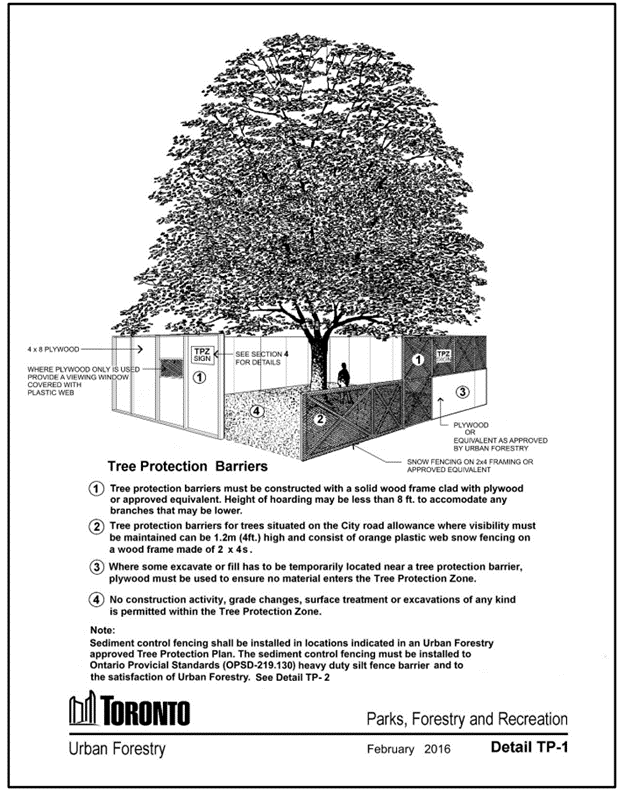
Source: Tree Protection Policy and Specifications for Construction Near Trees (page 13)
- Barriers must remain in place for the duration of the project.
- Clearly mark barriers with signage showing the TPZ and its restrictions, such as prohibitions on material storage or vehicle movement. The city has a standard placard for this purpose.
2. Temporary Construction Access
When construction access within TPZs is unavoidable, protective measures against root and trunk damage must be implemented. Restricted access protocols are the best means of protection.
- Root protection from compaction: Horizontal hoarding, which consists of 3 sheets of ¾” plywood screwed together at 90-degree angles and placed over 12” of mulch.
- Trunk protection: consisting of 4’ lengths of 2×4’s around the stem at risk and held in place with straps.
3. Arboricultural Treatments
Preparing trees for the stresses of construction improves their resilience. Preconstruction treatments include:
- Pruning: Removing deadwood or branches for clearance and structural stability. This may also trigger an injury permit requirement
- Irrigation: Ensure trees are well-watered before site activities alter hydrology.
- Mulching: Apply a 2 to 4-inch layer of mulch to conserve soil moisture and regulate temperature.
- Pest Management: Proactively treating pest or disease issues to improve tree vigour.
4. Exploratory Root Digs
Roots often extend well beyond the visible canopy. When an excavation plan must encroach upon a TPZ, the injury permit often stipulates that an exploratory dig be conducted to find and preserve major roots before excavation begins. Proper root pruning is usually necessary to prevent tearing and decay.
5. Team Coordination and Education
Tree preservation is a team effort. Conduct preconstruction meetings to:
- Educate contractors about TPZ restrictions and penalties for non-compliance.
- Highlight the location of preserved trees and their barriers.
- Establish communication channels for reporting issues or conflicts.
6. Monitoring and Compliance
Once protective measures are installed, they must remain in place until removal is approved by city staff, often after construction is complete. Non-compliance, such as moving barriers or unauthorized root cutting, can lead to significant fines and project delays.
Note: Toronto requires Urban Forestry inspections to approve tree protection measures before construction begins to ensure compliance with local policies.
Summing up
The preconstruction phase is the bridge between planning and execution, where proactive measures can make or break tree preservation efforts. By investing time and resources in this phase, you safeguard the health of urban trees and the success of your project.
Phase 4: Construction Phase – Staying on Track
The construction phase is where tree protection plans are put to the test. Heavy machinery, excavation, and a flurry of site activities can create significant risks for even the most carefully protected trees.
The high-stakes stage
This is a high-stakes period where a lack of care and attention can cause irreversible damage from root severing, soil compaction, and trunk injuries. Following the tree protection regulations helps keep the project on track while successfully preserving the trees through this hectic process.
Steps to Protect Trees During Construction
1. Enforce Tree Protection Zones (TPZs
Maintaining TPZ barriers is needed to prevent unauthorized access and protect roots, trunks, and crowns. Requirements include:
- No construction activities, material storage, or vehicle movement within the TPZ. This includes washing tools and dumping garbage or waste materials.
- Barriers must remain intact and may be inspected regularly for compliance.
- When work is unavoidable near a TPZ, alternative methods like tunnelling or bridging must be employed.
- Note: Toronto mandates signage on all TPZ barriers to ensure clear communication about restrictions.
2. Manage Root Impacts
Excavation near trees often threatens critical roots. Strategies to mitigate root damage include:
- exploratory digs: Using hydro-vac systems, air spade, or hand digging to find roots before excavation.
- root pruning: Clean cuts performed by arborists prevent tearing or decay.
Note: Toronto requires arborist supervision for any root pruning inside the TPZ to ensure minimal stress to trees.
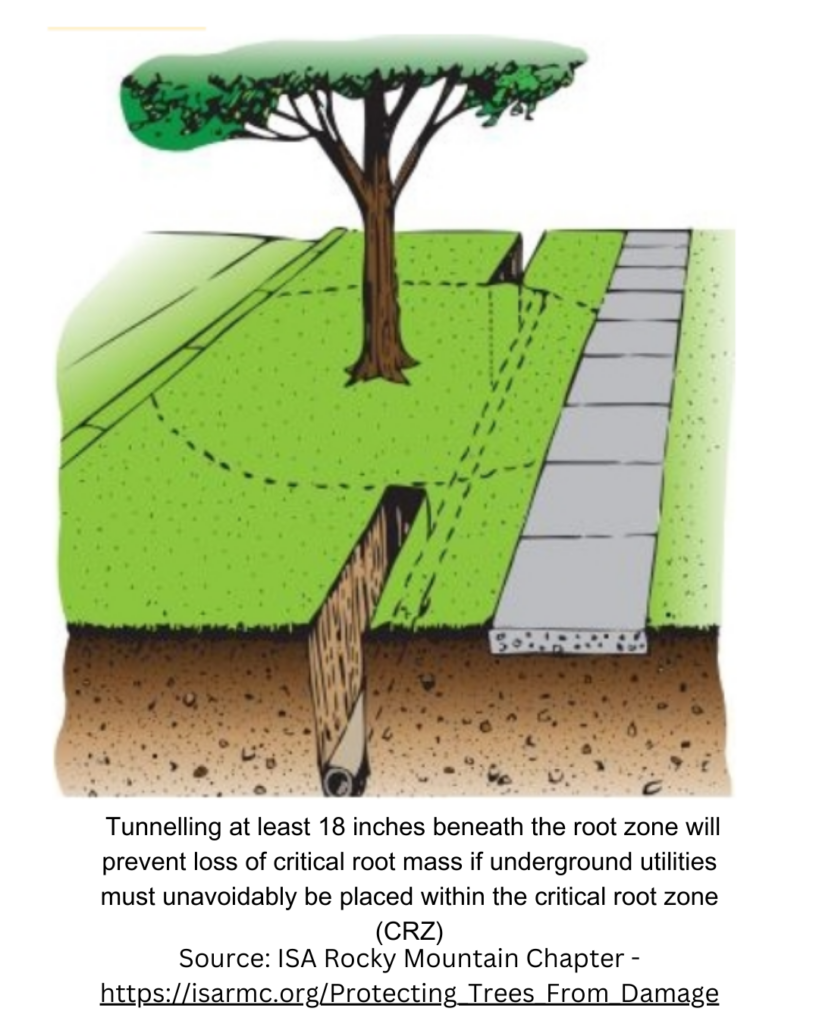
- Alternative Techniques: Tunnel under roots or reroute utilities to avoid disruption.
3. Monitoring Irrigation and Hydrology
Construction activities often alter site drainage, changing water availability for trees. Construction plans should account for this by considering:
- Installing temporary irrigation systems, such as soaker hoses or drip lines.
- Monitoring soil moisture levels to prevent drought stress.
- Ensuring grade changes do not divert water away from root zones.
4. Regular Site Monitoring and Reporting
Continuous monitoring by an arborist ensures that tree protection measures stay effective. Your arborists should be ready to:
- Be on-site when excavation is planned to supervise and provide documentation.
- Conduct periodic inspections to find and address potential issues.
- Recommend corrective actions if barriers are compromised or roots are exposed.
Team Collaboration
Unexpected challenges are inevitable during this dynamic phase. Regular communication between the construction team, arborists, and project managers ensures quick problem-solving and adherence to tree protection protocols.
A professional arborist can play an important role in navigating the sometimes conflicting interests of developers and regulatory officials.
The most critical tree protection work is done before construction crews arrive to break ground. The permit issued by the city forestry staff confirms that the planned tree protection measures are acceptable.
The best action during this phase is to leave the trees alone and respect the TPZs, only encroaching them as planned in the permitting phase.
Phase 5: Landscaping Phase – Completing the Picture
The landscaping phase is always a satisfying part of a project. The building is done, a dream realized, and now is the time to apply the final touches.
Plants, hardscape, maybe a pool. These elements bring the project to life. Trees that have been protected can begin their recovery and adjust to the new site.
This stage also presents unique risks, as planting, grading, and installing irrigation systems can easily damage trees. As with the construction phase, proper protection measures must be followed.
Why the Landscaping Phase Matters
After construction ends, trees are still vulnerable to soil compaction, root disturbance, and hydrological changes during landscaping. The needs of newly installed elements must be balanced with the protection of established trees.
Steps to Protect Trees During Landscaping
1. Maintain Tree Protection Zones (TPZs)
TPZs should remain intact until all landscaping activities conclude to ensure:
- No accidental damage occurs from planting or equipment.
- soil stays uncompact and undisturbed near roots.
- proper integration of new landscaping elements with existing trees.
Note: Toronto requires barriers to remain in place during landscaping and to be removed only after Urban Forestry approval.
2. Continue Protection When Excavating and Planting Near Trees
Planting beds, irrigation lines, and lighting installations can damage roots if not done carefully. Tree protection strategies include:
- Root zone awareness: Avoid trenching or digging within the TPZ unless necessary.
- Extensive regrading mitigation: Consider retaining walls if a grade needs to be significantly changed.
- Low-impact planting: Avoid installation with machines and rely on hand tools near tree roots.
- Arborist oversight: Have an arborist supervise landscaping activities near preserved trees.
3. Select Compatible Plants
New plantings within or near the TPZ should complement the preserved trees. Considerations include:
- Avoiding invasive species. Consider that some tree species are allelopathic and may suppress the growth of certain plants nearby.
- Choose plants with similar water and soil requirements to the tree. Native plant species are often recommended to support the ecological integrity of the urban forest.
- Designing with proper spacing to prevent overcrowding.
4. Protecting Soil Health
Healthy soil is essential for tree vitality. During landscaping:
- Do not dump waste material such as concrete in the TPZ.
- Avoid adding fill or compacting soil near tree roots.
- Apply a 2-4 inch layer of coarse organic mulch to retain moisture, regulate temperature, and reduce compaction risks.
- Use permeable materials for pathways and hardscaping near trees to support water infiltration.
5. Irrigation System Integration
Irrigation systems should be carefully designed and installed to avoid overwatering or underwatering trees:
- Keep irrigation emitters at least 3-5 feet away from tree trunks to prevent trunk rot.
- Encourage deep, infrequent watering to promote deep root growth and drought resilience.
If the trees are well established, assess whether supplemental irrigation is even needed—some trees rely on deep roots for moisture.
6. Post-Landscaping Assessment
After all landscaping activities are completed:
- Arborists should inspect the site to assess tree health and identify any signs of stress or damage.
- Remedial treatments, such as pruning or soil amendments, should be implemented promptly.
- Final reports should document compliance with preservation plans and provide guidance for long-term care.
Collaboration with Landscaping Teams
Educating landscaping teams about the significance of tree preservation prevents accidental damage and fosters a culture of responsibility.
Summing up
Treat the landscaping phase as an integral part of your tree preservation strategy. All the effort that went into the planning and execution of a tree protection plan can easily be undone in a single episode of carelessness.
Integrating trees thoughtfully into the site’s final design and following strict protection protocols will enhance the beauty and sustainability of your project.
Phase 6: Post-Construction Phase – Ensuring Long-Term Success
The end of construction doesn’t mark the end of tree preservation efforts—it’s just the beginning of a new phase.
End users take ownership of the space and the stewardship responsibilities of having trees in a landscape. The new stakeholders, whether homeowners, businesses, or other organization, need to be informed and educated about the efforts that went into preserving the trees.
Even the most carefully preserved trees may experience stress or damage during construction. Soil compaction (inside or outside of the TPZ), root pruning, and changes to drainage patterns can have lasting impacts. The post-construction phase offers an opportunity to assess and address these challenges, ensuring the long-term health of the urban forest.
Steps for Post-Construction Tree Care
1. Assess Tree Health
Conduct a post-construction inspection of all preserved trees. This includes:
- Check for signs of stress, such as wilting leaves, dieback, or fungal growth over several growing seasons.
- Assessing structural stability, particularly for trees exposed to root disturbance.
- Evaluating soil conditions, especially compaction and moisture levels.
The urban forestry department may require an arborist’s report to confirm tree health after construction is finished.
2. Maintain Soil Integrity
Healthy soil is critical for tree recovery. Post-construction soil management may include:
- Mulching: Apply a fresh layer of coarse organic mulch to support moisture and temperature balance.
- Soil Aeration: Tools like air spades relieve compaction without damaging roots.
- Nutrient Supplements: Soil analysis may reveal certain deficiencies that must be remedied. Incorporating slow-release fertilizers, compost tea, or biochar can help restore depleted soil.
3. Remedial Treatments
Trees sometimes require post-construction treatments to address damage or stress. These may include:
- Pruning: Remove dead, damaged, or hazardous branches to promote healthy growth.
- Irrigation: Adjust water delivery systems to compensate for altered drainage patterns or reduced root zones.
- Pest and disease management: Monitor and treat any emerging threats, such as borers or fungal infections.
4. Develop a Long-Term Management Plan
A well-defined care plan ensures the ongoing health of preserved trees. Plan elements include:
- Monitoring schedule: Regular inspections to find and address issues early.
- Maintenance protocols: Guidelines for watering, mulching, pruning, and fertilizing.
- Community engagement: Educating property managers and occupants about the value and care of urban trees.
5. Final Reporting and Compliance
Before closing the project:
- Submit final reports documenting tree health, compliance with preservation plans, and any treatments applied.
- When required, obtain approval from local authorities confirming that all conditions of the tree preservation plan have been met.
The Role of Collaboration
A shared commitment to preservation between arborists, property managers, and stakeholders ensures that trees continue to provide ecological, aesthetic, and financial benefits.
The post-construction phase is your opportunity to secure the long-term success of tree preservation efforts. Addressing construction impacts, supporting soil and water integrity, and committing to regular monitoring helps ensure that trees survive and thrive.
Final Thoughts
Tree preservation in urban development is much more than meeting legal requirements; it’s about preserving the long-term value that trees provide to our environment and communities.
Ultimately, it’s about embracing our collective dream of a sustainable future in our cities.
Adhering to tree protection best practices outlined in the Best Management Practices of the ISA helps developers and landscape architects create projects that harmonize growth with green infrastructure.
FAQ
What is the tree law in Ontario?
Ontario’s Forestry Act sets general rules for the entire province. Individual local governments such as Toronto, Mississauga, and Richmond Hill have added additional bylaws and regulations to safeguard their tree populations. These municipal bylaws are more restrictive than provincial laws, so it’s important to be familiar with local and provincial regulations when addressing tree-related matters.
What are the requirements of private tree bylaws in Toronto?
The Toronto Private Tree bylaws require a permit to remove or injure any tree on private property that is 30 centimetres or more in diameter. The permit may require any or all of the following:
- An Arborist Report, including the Tree Protection Plan
- a planting plan including planting details and plant lists for any proposed soft landscaping features
- cross-section details for any hard surface elements within the TPZ
The city official assigned to your case will advise you about the requirements for your project.
Can I remove trees on my property in Toronto?
Toronto’s Private Tree Bylaw mandates that property owners secure a permit before pruning or removing trees with a trunk diameter of 30 cm or more. The application to remove a tree is available here. When removing a tree, the property owner is required to:
- Submit an arborist report documenting the condition
- pay the permit fee
- replace the trees that are removed
- pay all related removal and planting costs
Note: The city frequently denies these tree removal permit applications because they do not accept the reason for removal.
How do you calculate the tree protection zone?
The calculation for the City of Toronto’s Tree Protection Zones (TPZ) is described in the document titled The Tree Protection Policy and Specifications for Construction Near Trees (page 6).
Why Tree Preservation is Important in Urban Construction: A Guide for Toronto Designers and Developers
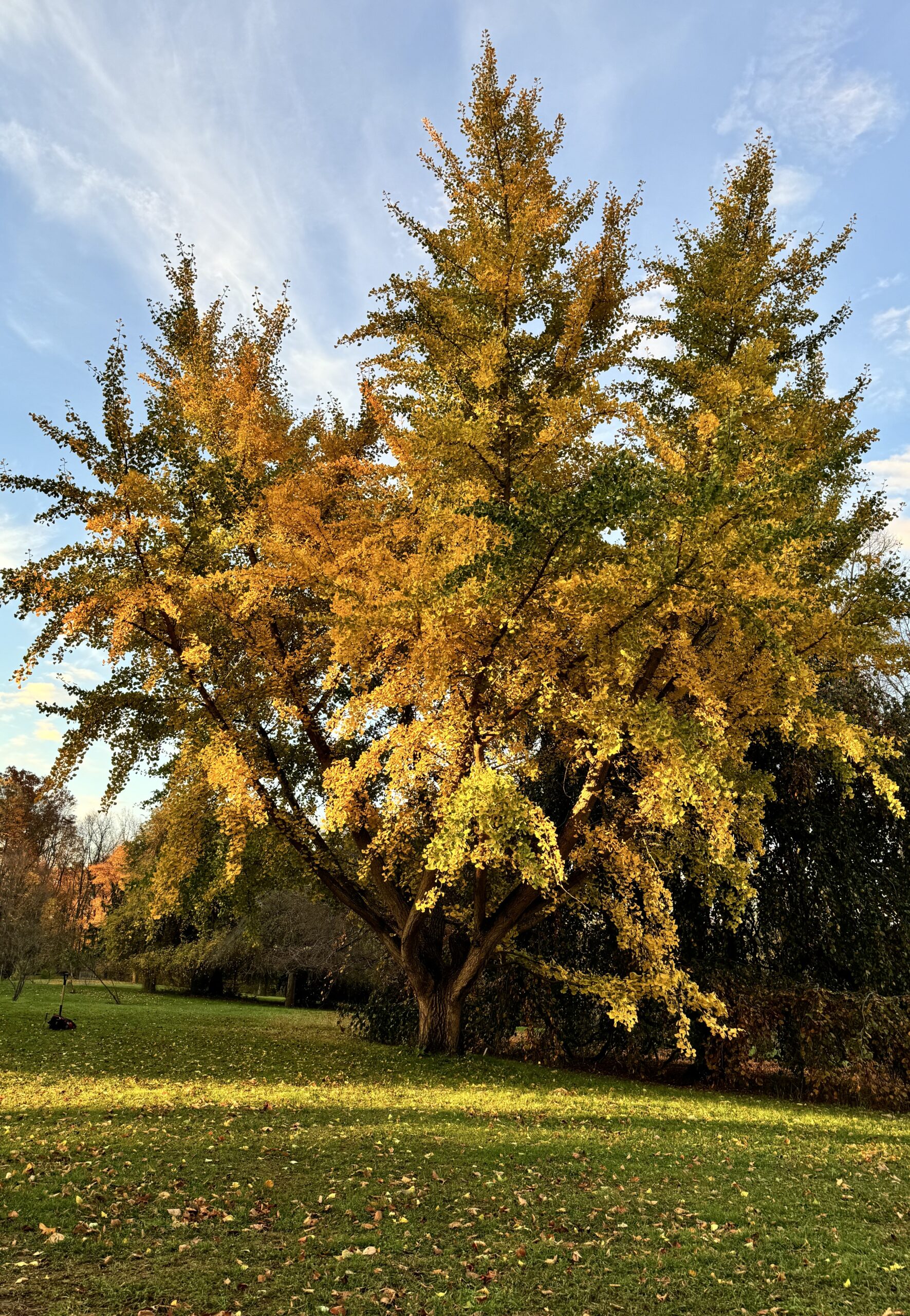
Preserving trees enriches communities, improves air quality, and adds lasting beauty to urban areas. 🌳✨
Construction is hard on trees. It’s an unfortunate reality. That’s why tree preservation has become such a hot topic in property development circles.
Trees need space, and they need healthy porous soil to support healthy root systems. This is as essential to trees as oxygen is to humans. Property development also needs space—often the same space the trees occupy. When the biological needs of trees compete with human economic and engineering priorities, the trees usually lose.
Property owners and developers often view trees as a nuisance and impediments to construction. So, they remove them to gain easier access and building placement.
But that reality is changing. In recent years it’s become increasingly clear that preserving and incorporating trees into development plans can significantly enhance property values and marketability. This shift is driven by compelling evidence of trees’ economic, environmental, and social benefits to urban properties.
Simply preserving a tree (i.e. not cutting it down) is not enough. Even when they are preserved during the construction phase, trees often sustain heavy damage that compromises the health and growth capability of the trees. This frequently leads to decline and premature removal several years later.
This is why urban governments have tree protection regulations: to ensure things are done correctly, in the best interests of the trees.
Understanding the Value of Trees
Healthy urban tree canopies have many environmental and economic benefits, and plentiful amenities to boost the quality of life for residents. Trees can markedly reduce cooling costs, buffer road noises, mitigate stormwater damages from flooding events and generally increase property appeal, all leading to higher sales and rental prices.
A recent study explored the range of benefits created by Toronto’s urban forests between 2012 and 2020. The researchers estimated that just 1% additional increase in tree cover within a postcode produced a corresponding 1% lift to property values in the same area during that period.
Other research has made bolder statements. One realtor found that tree cover corresponded with 9.5-18.5%, price uplift in canopied streets.
Mature trees create most of the beneficial canopy effect. They deserve special consideration because their benefits compound over time. and it takes decades to replace them. A UK study by Blue Green Urban consultants estimated that the breakeven point—where the accumulated benefits from the tree overtake the accumulated maintenance cost—occurs at about 30 years of tree life, depending on the species, climate and a number of other factors.
The City of Toronto has set a target of 40% canopy cover to maintain high livability standards and benefit from the full range of environmental, economic and community services that trees can provide.
To achieve this lofty goal, the city established strict protections for trees on public and private land, recognizing their role in maintaining urban ecological balance.
Planning for Success
Too often, developers address the landscape element of a construction project last. Tree protection planning is fitted in “where possible.” This approach means that the green elements receive lower priority and are easily viewed as expendable.
Many urban and suburban communities mandate tree protection. Property developers who don’t include tree protection plans in the early stages of a project may find themselves paying dearly later on. If the construction plans don’t meet the tree protection standards, the applicant will be required to rework their plans, causing delays and extra costs. Sometimes, they must abandon the project entirely.
Proactively incorporating tree preservation during the initial planning phases can avoid costly delays and ensure compliance with regulations.
For example, Toronto’s Private Tree By-law and Ravine and Natural Feature Protection By-law requirements include:
- Tree Protection Plans (TPP)- Diagrams showing the existing trees on a property at the time of a permit application in relation to the planned construction on a site plan. They include:
- Tree Inventories: Detailed assessments of tree species, size, and condition.
- Tree Protection Zones (TPZs): Establishing clear boundaries to shield trees from construction impacts. Toronto mandates TPZ distances based on tree diameter to ensure that critical roots and soil remain undisturbed.
- Replanting Plans- Replacement trees are identified on a separate drawing of the site plan. Important details include:
- Location, species and caliper diameter (given by the nursery). Toronto requires replacement trees to be at least 50 mm caliper for deciduous trees and 1.75 to 2.5 metres in height for coniferous trees.
- Replanting time: typically the next spring or fall in the year after construction, whichever is earlier.
- Arborist Report- communicates the details of the TPP and addresses any concerns or grey areas that arise resulting from the design.
Avoiding Common Pitfalls
Construction-related damage often stems from a lack of communication or awareness about tree biology:
- Not considering tree protection in the ideation phase of the planning process. This often leads to costly redesign and new drawings. Minor design changes can correct problems early in the planning process to reduce tree damage and improve the likelihood of tree survival. An arborist might suggest aligning driveways and walls; reconfiguring grading; designing bridging structures such as footings or paving over roots; and rerouting or tunnelling utility lines under roots.
- Failing to consult with neighbours when their trees will be affected. More often than not, early and open communication can make for much smoother interaction down the road and lead to fewer problems. A good Tree Protection Plan is very good at ensuring tree protection and survivability, which is often enough to put concerned minds at ease
- Physical Injuries:
- Equipment can scar trunks and break branches, causing permanent damage.
- Root Cutting: Excavations near trees risk severing critical roots, destabilizing and stressing trees.
- Soil Compaction: Heavy equipment can compress soil, reducing its ability to hold air and water essential for root health.
Toronto’s Tree Protection Policy highlights preventative measures like exploratory digs using hydro-vac systems or air spades to identify roots before excavation and the use of barriers to limit equipment movement in root zones.
Collaboration is Key
A successful tree preservation strategy hinges on collaboration. Engaging certified arborists early ensures that trees are evaluated for suitability, protection measures are tailored to the site, and all team members understand the importance of compliance. Arborists can ease communication between developers, contractors, and local authorities to ensure smooth project execution.
Final Thoughts
Tree preservation in urban development is not just about meeting legal requirements; it’s about embracing the long-term value trees provide to our environment and communities.
Ultimately, it’s about embracing our collective dream of a sustainable future.
By adhering to policies like those set by the City of Toronto and following best practices outlined in the Best Management Practices of the ISA, developers and landscape architects can create projects that harmonize growth with green infrastructure.
“The future of sustainable and inclusive cities will surely depend on how we tend to and protect our urban trees.” World Economic Forum, 2022
FAQ
What is the tree law in Ontario?
Ontario’s Forestry Act sets general rules for the entire province, while individual local governments such as Toronto, Mississauga, and Richmond Hill have additional bylaws and regulations to safeguard their tree population. These municipal bylaws are more restrictive than provincial laws, so it’s important to be familiar with local and provincial regulations when addressing tree-related matters.
What are the requirements of private tree bylaws in Toronto?
The Toronto Private Tree By-laws require a permit to remove or injure any tree on private property that is 30 centimetres or more in diameter. The permit application may require any or all of the following:
- An arborist report
- A planting plan
- A commitment to re-planting 1–3 trees
- Payment of the cash value of the tree
- Cross-section details for any hard surface elements within the TPZ
- Planting details and plant lists for any proposed soft landscaping features
Click here to apply for a permit from the City of Toronto.
Can I remove trees on my property in Toronto?
Toronto’s Private Tree Bylaw mandates that property owners secure a permit before pruning or removing trees with a trunk diameter of 30 cm or more. The application form is available here.
How do you calculate the tree protection zone?
The City of Toronto has defined Tree Protection Zones for construction permits based on the DBH of the tree.
What are the City of Toronto tree removal permit requirements?
The city often denies tree removal applications because they don’t accept the reason that is provided. For example, if the tree is not dead, diseased, hazardous, or an undesirable species, the application will likely be denied.
Look! Sometimes we don’t get along with the people who live near us. They are too loud. They litter. They do silly things that make no sense. But we usually can’t force them to leave. It is similar to trees.
These bylaws reflect a community’s desire to preserve canopy and reflects a push towards “coexistence” with our leafy neighbours. Trees provide essential services that we cannot easily quantify but notice when they are gone.
Click here for the official City of Toronto tree removal permit requirements.
How to Choose the Right Tree Protection Method to Protect Trees on Construction Projects
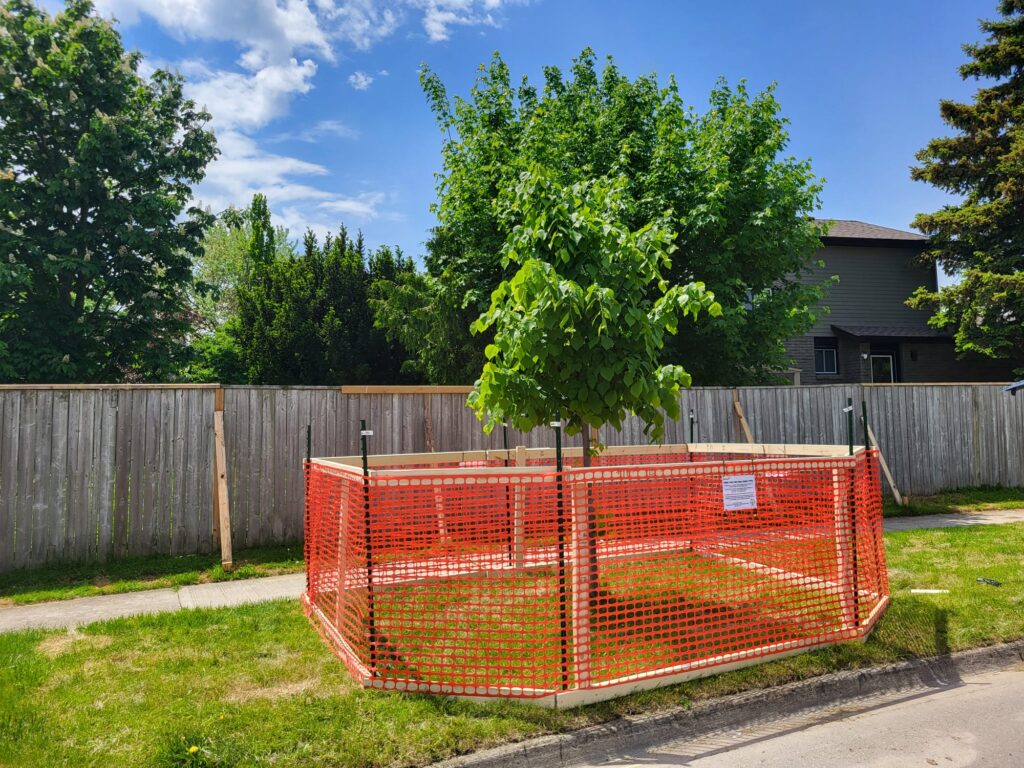
When urban construction projects intersect with nature, the trees often suffer. Ensuring the best tree protection is essential—not just for compliance with urban forestry regulations, but for safeguarding long-term environmental health. High-quality tree protection fence or hoarding is your best defense against damage caused by construction activity, weather, and even vandalism.
In this guide, we’ll show you how to protect trees on construction projects. From assessing site-specific risks to selecting the right materials to use, you’ll learn actionable steps to protect your investment and contribute to a thriving urban canopy.
Steps to Choosing the Right Tree Protection System
Step 1: Identify the threats to trees on your project
Understanding the risks specific to your construction site is the first step in choosing the right tree protection. Common threats include:
- Heavy Machinery Damage: Construction vehicles can easily harm tree trunks without proper protection and compact the soil.
- Material Storage: Heavy material inside of a Tree’s root zone compacts the soil and leads to root damage.
- Foot Traffic and Soil Compaction: High-traffic damages the soil and tree roots, and reduces tree health.
Once you’ve identified the risks, you’ll have a clear sense of the level of protection required.
Step 2: Understand urban forestry requirements
In cities like Toronto, urban forestry regulations dictate specific guidelines for protecting trees on construction sites. For example, regulations often require:
- Tree protection fencing or hoarding that meets height and durability standards. Cities usually have a specification sheet, see here for the City of Toronto’s specifications.
- Properly defined tree protection zones (TPZs) surrounding trees.
- Documentation of compliance in arborist reports completed by a certified arborist.
Working closely with a certified arborist can ensure you meet all legal requirements and avoid costly fines.
Step 3: Select the right type of hoarding
Choosing the appropriate hoarding is an important step in safeguarding trees during construction projects. The right type of protection ensures trees are shielded from potential damage caused by equipment, debris, or project activity.
- Vertical: Vertical hoarding is used to create a protective barrier around trees or sensitive forestry areas. Its primary aim is to shield trees from direct impact or damage caused by construction equipment, debris, or unauthorized access.
- Horizontal: Horizontal hoarding protects the root zone and soil around trees, particularly where excavation, heavy equipment, or foot traffic could cause compaction or damage.
- Trunk: Trunk hoarding protects the tree’s trunk from direct physical damage caused by impacts, abrasions, or collisions.
By selecting the most suitable type of tree protection—whether vertical, horizontal, or trunk-focused—you can effectively protect trees and meet environmental requirements throughout your project.
Step 4: Consider installation and maintenance needs
Tree protection barriers should be easy to install and maintain throughout the construction timeline.
TMZ Guidelines – City of Toronto
The City of Toronto and many surrounding municipalities are very particular when it comes to tree protection. Choosing the right arborist early in the design stage can save thousands in fines, delays, and plan amendments down the road. Book an Arborist Consultation Call with Gray Matter Forestry Consulting today to ensure your project’s tree protection plan is on point.
Conclusion
Choosing the right tree protection barrier is a required step in protecting young trees on construction sites. By assessing site-specific risks, understanding regulatory requirements, and prioritising durability, you can safeguard your trees, meet compliance standards, and enhance the environmental value of your project.
At Gray Matter Forestry Consulting, we specialise in helping construction professionals protect trees efficiently while staying on track and within budget. Book an Arborist Consultation Call today to create a customised tree protection plan that works for your project.
Arborist Construction Site Inspections: Purpose and Best Practices
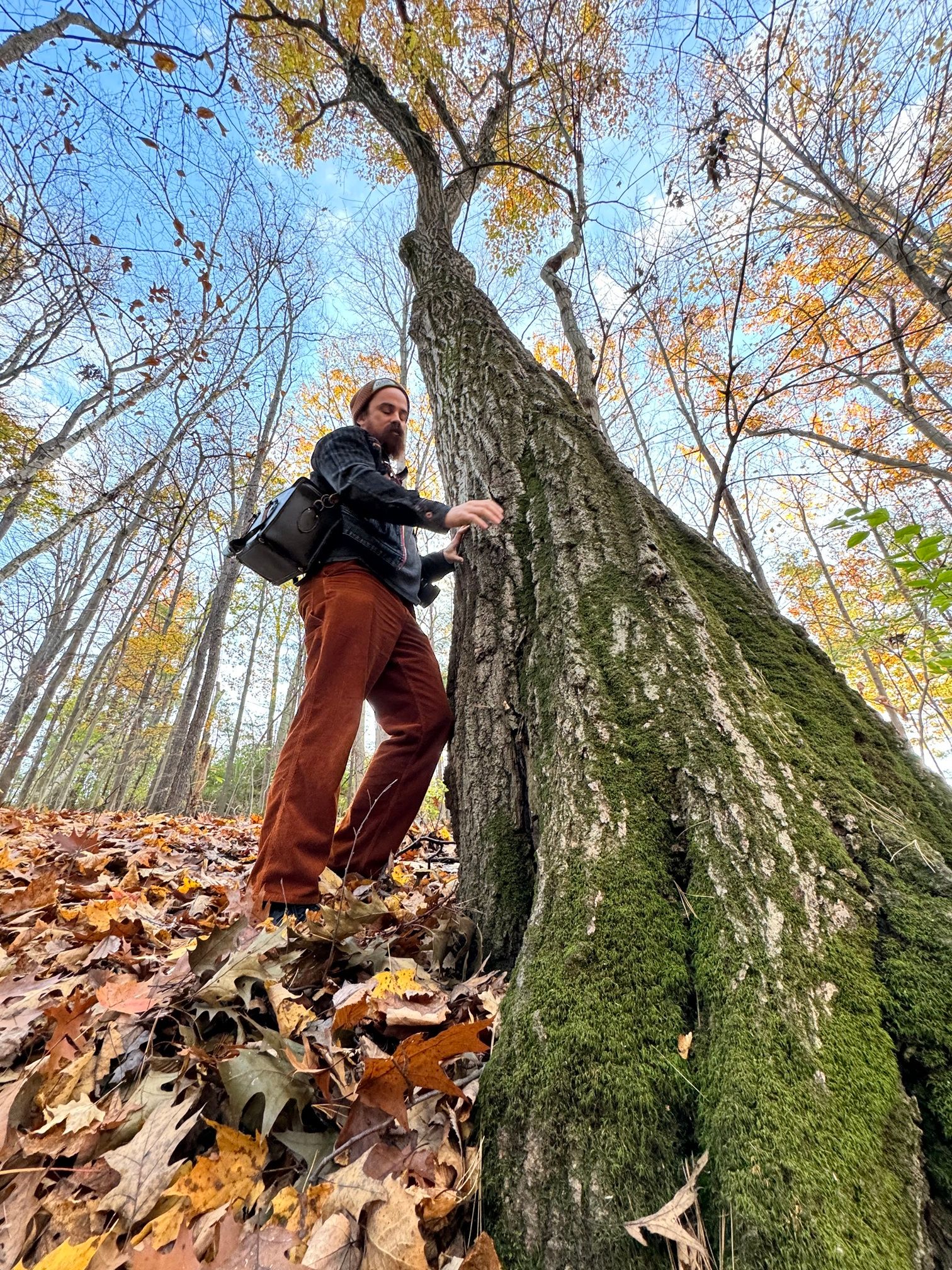
Construction projects often involve working near trees, which serve as essential assets to the environment and the community. Developers and contractors rely on arborist construction inspections to protect trees from potential damage during construction and to comply with local regulations. These inspections provide the guidance needed to minimise harm to trees while maintaining project timelines. In this blog, we explain the purpose of Arborist Construction Inspections and highlight best practices that help developers and property owners integrate tree preservation into their construction efforts.
Primary points
- Arborist site inspections are an essential part of the construction permitting process.
- Understanding local regulations helps ensure compliance and avoid penalties.
- Arborists use specialized tools and techniques to evaluate tree health and safety.
- Effective pre-assessment planning can simplify the inspection process and improve outcomes.
The Need for an Arborist Site Inspection Prior to Construction
On-site visits to proposed construction sites are required under urban forestry tree regulations in many urban areas under municipalities. The arborist who conducts these site assessments brings their expert knowledge about the biological needs of trees and how to manage their health and well-being. It’s an essential element in striking a balance between the ecological, social, and aesthetic values contributed by the urban forest and the economic development and personal property rights of the community.
The purpose of the site visits is to identify valuable trees that need to be safeguarded and preserved and identify trees that may be hazardous during construction and require removal.
Why do we protect trees?
Trees offer many benefits to the urban environment. For starters, they help to keep the ecological balance in check by preserving older trees that offer shade, a home for animals, and aesthetic appeal. Additionally, they lower the chances of tree-related accidents, which can be both hazardous and expensive.
What does an arborist do during a site inspection?
Arborists identify the locations, conditions, and stability of trees on a construction site. The main goal of these inspections is to make sure that trees are protected during construction and continue to be healthy and viable after the construction project is finished.
When conducting an inspection, arborists look at a variety of things, including the structural soundness of trees, any possible dangers, and how construction work might affect the trees. This evaluation assists in making educated choices about which trees to keep, which to get rid of, and how to reduce any potential hazards.
By identifying which trees are to be preserved and which are not, construction teams can avoid accidents and damage. Protecting healthy mature trees can greatly increase the value and attractiveness of a property.
Moreover, arborist inspections help ensure that local regulations are met. Many cities have stringent rules about tree preservation, and failure to comply with these can lead to heavy fines and delays in the project. By getting an arborist involved early in the process, construction teams can ensure they meet all the necessary legal requirements.
What Happens During a Site Inspection?
Arborist site inspections are a methodical procedure to provide a thorough assessment of the site’s trees and offer useful recommendations for the construction crew.
Planning before the assessment
Before the inspection, the arborist collects all the necessary information about the site, such as site plans, construction schedules, and past tree assessments.
In this step, the arborist will determine which trees need to be checked based on their location, size, and species. This planning makes sure that no important trees are missed.
On-site inspection process
On-site, the arborist examines every tree on the property and collects data about the species, diameter, condition, structure, and defects or hazards.
Each tree is documented with notes and photographs to keep an accurate record.
Understanding Rules and Regulations
Builders and property owners need to understand and comply with local rules and regulations during arborist site inspections. This knowledge ensures that construction projects do not unintentionally break any tree protection laws.
Getting to know your local laws
Local laws can differ greatly, so learning the specific laws in your area is important. These laws often dictate which trees can be removed, how many replacement trees are required, preservation methods, and the penalties for not following the rules.
Arborists must maintain a close working relationship with local authorities to stay current with the latest information. This cooperation can help avoid confusion and guarantee that all required permits and approvals are secured before the start of construction.
Consequences of non-adherence
Not adhering to local regulations can result in severe repercussions. Projects that do not follow tree protection laws can be subjected to fines, work halts, and even legal lawsuits. These penalties can cause significant construction delays and cost overruns.
Construction teams that make compliance a priority can avoid these problems and contribute positively to the community and environment.
Examples of Arborist Inspections Done Right
Tree preservation requires thoughtful planning and careful execution. Proper planning and execution can help you achieve great results without sacrificing the economics of the project.
Arborists can help by suggesting measures to protect the health of the trees during construction.
For example, in one suburban development project, the arborist’s proactive approach helped identify potential hazards early on. This allowed for timely interventions that saved a 200-year-old oak tree and ensured the site’s safety. This tree became a central feature of the development, increasing its attractiveness and worth.
Protecting trees
Arborists play in balancing the needs of development with the preservation of the environment.
Practices like protecting the root zone, pruning with care, and keeping an eye out for signs of stress are all key to keeping these important trees healthy. Arborists do these things to ensure trees continue growing and thriving for future generations to appreciate.
Striking a balance between development and environmental conservation
Striking a balance between development and environmental conservation can be tricky, but it is not impossible. Arborists are instrumental in this endeavour, offering expert advice and solutions that allow construction projects to continue without sacrificing the health of the environment.
Arborists work closely with construction teams and follow strict guidelines to make sure that development and nature can live together. This creates a sustainable and balanced environment.
Common Questions
Why are arborist site inspections important?
Arborist site inspections assess the health and safety of trees within a construction site. These inspections are designed to pinpoint potential risks, gauge the effects of construction activities on trees, and formulate strategies to conserve and safeguard valuable tree resources.
As a result, arborists help to avoid accidents, ensure adherence to environmental laws, and increase the overall worth of the project.
What credentials does an arborist need?
An arborist should have the necessary certifications and experience in tree care and management. The International Society of Arboriculture (ISA) Certified Arborist credential is a common qualification.
Furthermore, arborists should bring hands-on experience in performing site inspections, evaluating tree health, and devising preservation strategies. Their knowledge guarantees that construction projects can efficiently harmonize development requirements with environmental conservation.
What is the role of arborist inspections in securing project approvals?
Arborist inspections and reports are required to secure construction project approvals by demonstrating compliance with urban forestry tree protection regulations. It is an integral part of the permitting process in many communities.
Construction teams can improve their success in the permit approvals process by proactively addressing tree protection issues in their plans.
What should be included in an arborist’s final report?
The arborist report will include a detailed evaluation of the trees on the site, including their health, structural integrity, and potential hazards. The report will also include recommended preservation and mitigation measures, such as root protection zones, pruning, or removal of hazardous trees.
Arborist construction site inspections are essential for ensuring the health and safety of trees during development projects. These inspections involve assessing the condition of trees, identifying potential risks, and recommending measures to protect them. For more detailed guidelines on tree preservation, you can refer to the tree protection guidelines for your city or municipality.
What Does an Arborist Report for Construction Permit Applications Look Like? What to Expect…
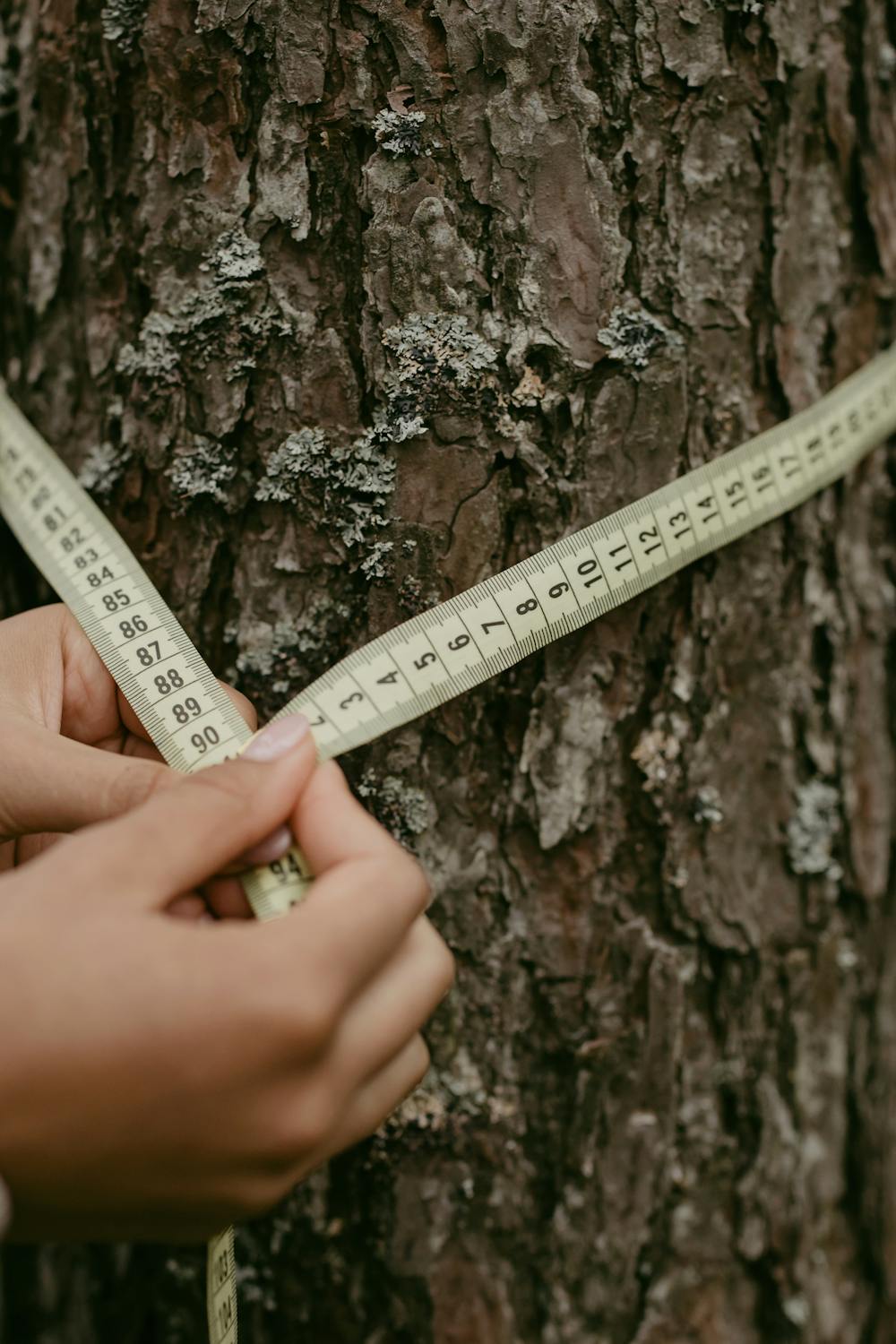
An arborist report is a vital yet often overlooked requirement in construction project planning within the Greater Toronto Area (GTA). Skipping this step can lead to costly delays and complications.
Every construction project in the GTA must comply with local Tree Protection Bylaws if protected trees are present. An arborist report and an accompanying Tree Protection Plan (TPP) are the two key documents needed to demonstrate compliance and obtain a building permit in these communities. Ensuring these documents are in place is an essential part of the pre-construction process. This guide will walk you through the purpose of an arborist report, its key components, and what to expect during the process.
Why must I provide an Arborist Report with my permit application?
Trees in urban settings are often exposed to greater stressors than their forest counterparts and construction damage is a major contributor to premature tree decline and death.
For this reason, many southern Ontario municipalities have enacted tree protection bylaws, which mandate a Tree Protection Plan to safeguard bylaw-protected trees.
Nearly all of the city and municipal governments within the GTA have some form of tree protection bylaws. The details of the bylaws and their requirements vary between communities, so developers and homeowners must consult their local bylaws for specific information.
The City of Toronto has led the way in urban forest protection across the region and tends to have the strongest requirements.
What is a Protected Tree?
All trees on city property in Toronto are protected.
Trees on private property in Toronto are also protected if the trunk diameter is 12 inches (30 cm) or more when measured 4 ½ feet above the ground (1.4m).
Components of a Comprehensive Arborist Report
An arborist report typically includes several key components. Each section provides detailed information to help you understand the condition of the trees on the property and what actions need to be taken.
These sections follow this format:
- Summary of the contents of the plan and a reference to the reader
- Observations outline the details collected by the arborist at the time of the site visit
- Discussion provides details of the various elements, including the regulatory context, report recommendations, and other noteworthy details about the trees on the property, such as hazards
- Recommendations and Conclusions
- Appendix 1: Tree Inventory: A table including a detailed analysis of each tree on-site
- Appendix 2: Tree Protection Plan: A copy of the TPP (delivered separately) that visually represents the property, the work being done, each tree on site and the tree protection recommendations described in the report.
Detailed Sections of an Arborist Report
Here’s a deeper dive into the sections of an arborist report. These sections provide the analysis and recommendations required in the construction permit application.
Summary of the project, the client information, and property details
This section sets the context for the report and serves as a helpful quick reference for the plan reviewer. It identifies the surveyed trees and what may happen to them because of construction (Preserve, Injure or Remove). If permits are required, this will be noted here as well
For example:
Client: John Doe
Address: 123 Elm Street, Toronto, ON
Date of Inspection: July 15, 2024
Proposed work: Construction of a new addition to the rear of the existing house.
- Trees on site: 63 trees to be preserved
- 2 trees to be injured
- 1 tree to be removed
2 Injury and 1 Removal permit is required
Observations
This section describes the details that were collected by the arborist during the site visit. It typically includes the date of the assessment, the state of the property (preconstruction, demolition complete, construction ongoing etc.), an overview of the trees’ condition and ownership and other noteworthy details.
This section helps the reader understand the context in which the arborist is making the report and the details that were observed as the arborist found the setting, the scene for the discussion, assessments, and recommendations to follow.
Discussion
Here is where the meat of the report is found. It includes a summary of the regulatory context in the municipality where the project is to take place and the necessary action required, referencing the Tree Protection Plan (found in the Appendix). Other significant details, such as the specifics about recommendations in the report or other noteworthy details regarding the trees, such as potential hazards, will be included here.
Recommendations and conclusion
Wrapping up the report, the recommendations outlined in the previous section are summarized for easier reference. The details of the summary are presented again inside the context of the completed report.
Appendix 1: Tree inventory
The tree inventory is one of the most important parts of the arborist report. It lists all the trees assessed during the inspection and details about each tree. This typically includes:
- Species
- Diameter at Breast Height (DBH)
- Height
- Canopy spread
- Health and structural condition
- Action to be taken resulting from the proposed project (Preserve, Injure, Remove)
- Whether or not permits will be required
- Further observations or details of each tree as necessary
Appendix 2: Tree protection plan preview
The Tree Protection Plan (TPP) is typically delivered as a high-resolution document attached to the Arborist Report.
This document is a visual map overlayed on the client’s site plan, where construction details are depicted to scale with all the inventoried trees represented in their appropriate locations.
The TPP outlines specific strategies to prevent damage to the roots, trunk, and canopy of protected trees in the vicinity. It may include site-specific recommendations such as protective fencing, proper excavation methods, and designated no-go zones, all designed to maintain tree health and compliance with local tree protection regulations.
The plan is a mandatory compliance document for obtaining construction permits in urban areas where tree conservation laws are enforced.
Additional Resources and Appendices
The additional resources and appendices provide supplementary information and visual aids to support the findings and recommendations.
Photographs and visual aids
The visual record of the trees’ condition helps illustrate the issues identified during the inspection. These images help plan reviewers visualize the trees being discussed and understand the arborist’s observations
Photographs might include visible signs of disease, such as fungal growth or insect damage.
Reference materials on tree care
The arborist report may also include reference materials on tree care, such as best practices for tree maintenance and pest and disease control.
For example, the arborist might include a guide on proper pruning techniques or how to manage common pests, to help property developers and construction managers make informed decisions about tree care.
The maps and diagrams ensure everyone involved in the project understands the exact locations and conditions of the trees, making it easier to plan construction activities without violating local bylaws.
For more information, you can refer to the Arborist Reports Guide.
Arborist qualifications
When searching for a tree care professional, look for up-to-date ISA (International Society of Arboriculture) credentials, or Ontario qualified credentials.
ISA credential holders must: have experience, pass an exam, renew their certificate every three years, continue their education and training, and sign a Code of Ethics. You can find an ISA Certified Arborist in your area here. Or verify if someone is a currently ISA certified here.
When hiring a professional, also ask for proof of insurance, references, and a written contract. See more tips for hiring an arborist here.
Conclusion and Summary
In summary, an arborist report is a required document document for every construction project in the Toronto area, where there are trees on the property. It ensures compliance with local bylaws, helps protect the urban canopy, and provides valuable information for maintaining the health and safety of trees on the property.
Understanding the components of an arborist report and what to expect during the process helps property developers and construction managers make informed decisions and avoid potential delays and penalties.
Key Findings
- Essential Compliance: An arborist report is required to secure a construction permit in many urban areas like the Greater Toronto Area. This report ensures that all trees affected by construction are properly assessed and protected.
- Detailed Components: Comprehensive arborist reports include sections such as observations, discussions on regulatory compliance, and recommendations, along with a tree inventory and Tree Protection Plan. These components provide detailed insight into each tree’s health and how to safeguard it during construction.
- Protective Measures: Recommended actions within the report, like tree protection hoarding and low-impact root excavation, may be prescribed to minimize damage to trees. These methods maintain the tree’s health and stability while ensuring compliance with urban forestry guidelines.
- Qualified Arborist Insight: A certified and experienced arborist must prepare the report. Their expertise helps in creating a reliable guide for property developers to protect trees and comply with environmental regulations.
Overall Tree Health and Recommendations
The arborist report includes an assessment of the tree’s health and structural condition. It offers clear recommendations for actions and treatments, such as pruning, tree removal, and pest control measures. These recommendations help property developers and owners ensure the safety and health of the trees on their property.
Frequently Asked Questions (FAQ)
What qualifications should a certified arborist have?
A certified arborist should have credentials from recognized organizations, such as the International Society of Arboriculture (ISA). It is also good if they also hold a Tree Risk Assessment Qualification (TRAQ) and have several years of experience in the field.
How often should trees be assessed by an arborist?
Trees should be assessed by an arborist at least once every three to five years. However, more frequent assessments may be necessary if there are visible signs of disease, pest infestations, or structural issues. Construction activities can impact trees without anyone noticing for several years until the tree begins to show signs of stress
What are the common signs a tree is unhealthy?
Common signs of an unhealthy tree include:
- Poor vigour in the foliage of the tree (Yellow or withered leaves)
- Fungal growth on the trunk or branches
- Dead or dying branches
- Pest infestations, such as insect borers
- Cracks or splits in the trunk
- Leaning or unstable trees
When is an arborist report required?
An arborist report is required when applying for a construction permit in Toronto. It is also necessary if there are concerns about the health or safety of trees on the property, or if tree removal is being considered.
5 Steps to Navigating Toronto’s Tree Protection Bylaws
The Arborist Report and Tree Protection Plans (TPP) are a requirement of the permit application process in Toronto for any construction project involving trees. Whether you’re planning to remove, preserve, or replant trees, understanding this process can save you time and prevent costly delays by ensuring compliance with Toronto’s stringent urban forestry bylaws.
In this guide, we’ll break down the 5 steps you must follow to navigate the tree bylaws required for your permit application effectively. By the end of this blog, you’ll know how to streamline your application and keep your project on track.
1. Determine If a Permit Is Required
The first step is understanding whether your project requires an urban forestry permit.
In Toronto, permits are typically necessary if:
- You are removing a tree with a trunk diameter of 30 cm or more, measured at 1.4 metres above ground level.
- Your project impacts protected trees located on public or private property.
To avoid missteps, consult Toronto’s Private Tree Bylaw and Municipal Code, Chapter 813.
Tip: Unsure if your project requires a permit? A certified arborist can help assess your project and determine your obligations.
2. Conduct a Tree Inventory and Assessment
Once you’ve confirmed that a permit is required, the next step is to prepare a tree inventory and assessment. This document should include:
- A detailed inventory of all trees on or near your site, including species, size, and location.
- Tree health assessments to identify diseased or hazardous trees.
- Recommendations for tree preservation or removal based on your project’s scope.
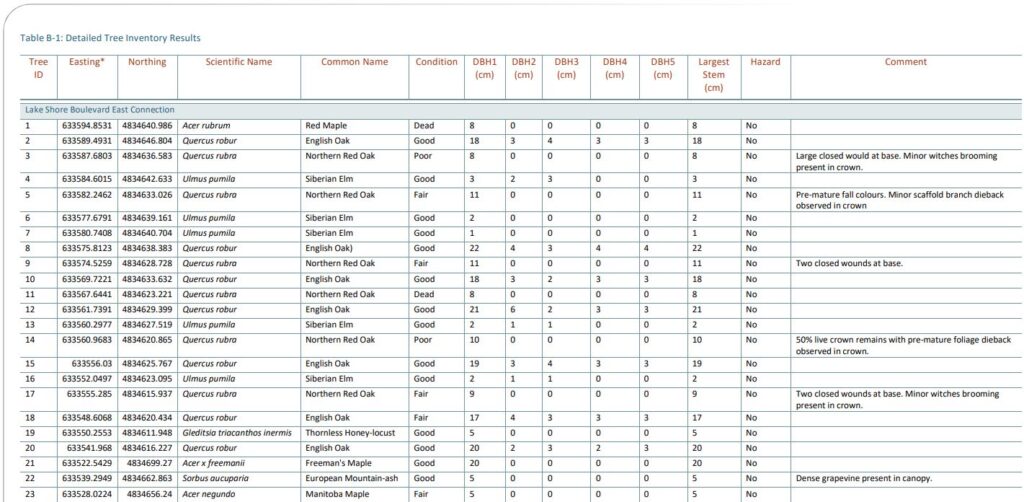
Sample tree inventory table
3. Prepare Your Urban Forestry Permit Application
Next, compile the necessary documents for submission. A complete urban forestry permit application in Toronto includes:
- Application Form: Available through the City of Toronto’s Urban Forestry Services.
- Arborist Report: Detailing the findings from your tree inventory and assessment. This report must be prepared by a certified arborist.
- Site Plan: Showing tree locations, tree protection zones, and areas of proposed development.
- Tree Protection Plan: Outlining measures to protect trees during construction.
Make sure your submission is accurate and thorough, as incomplete applications are a leading cause of delays.
4. Submit Your Application and Pay the Fees
Submit your completed application to the appropriate division of Toronto’s Urban Forestry Services. Application fees vary based on a number of factors, including the number of trees impacted and whether they are located on private or public property.
Keep the following in mind:
- Submit your application well in advance of your project timeline to account for processing times.
- Retain copies of all submitted documents for your records.
5. Implement Tree Protection and Compliance Measures
Once your permit is approved, you’re required to follow the outlined conditions, including:
- Monitoring tree health throughout the project.
- Adhering to tree replacement requirements, if applicable.
Non-compliance with permit conditions can result in penalties, delays, or permit revocation. To ensure everything runs smoothly, collaborate with your arborist to oversee tree protection measures during construction.
Navigating the urban forestry permit application process in Toronto doesn’t have to be overwhelming. Let Gray Matter Forestry Consulting guide you through each step with expert arborist reporting and support. Book an Arborist Consultation Call today to get started!
Additional Tips for a Smooth Urban Forestry Permit Application Process
Engage an arborist early
Involving an arborist at the beginning of your project helps identify potential issues and ensures all documentation meets city requirements.
Double-check your application
One of the most common mistakes is submitting incomplete or inaccurate forms. Double-check every detail before submission to avoid delays.
Plan for tree replacement costs
If trees are being removed, budget for replacement tree planting. Toronto’s bylaws often require planting multiple trees per tree removed, which can add to project costs.
Stay updated on bylaws
Urban forestry regulations evolve over time. Stay informed about the latest updates to ensure your project remains compliant.
Conclusion
Successfully navigating the urban forestry permit application process in Toronto is essential for construction projects involving trees. By following these 5 key steps—determining if a permit is required, conducting a tree inventory, preparing a detailed application, submitting your documents, and implementing compliance measures—you can avoid penalties, and keep your project on schedule.
At Gray Matter Forestry Consulting, we specialise in helping GTA professionals streamline their urban forestry permit applications with accurate arborist reports and expert guidance. Book an Arborist Consultation Call today to simplify your process and ensure compliance with ease.